I’ve sat in my sewing room surrounded by bolts of fabric in colors that would make a sunset jealous and been stressed about not having the time to fully devote to the quilt I’m designing. But now I do have the time and I’ve designed and made some of my best quilts later in life. I now have the time and patience to totally focus on a project, without all the distractions, commitments and responsibilities of my earlier life.
At 80-something, I’m creating some of the most beautiful and meaningful work of my life. And I’m here to tell you: your most creative years aren’t behind you. They’re right now.
The Creativity Myth We Need to Bust
Society has this ridiculous notion that creativity peaks in youth and declines with age. We’re supposed to believe that innovation belongs to the young, that new ideas require fresh minds, that artistic expression is somehow linked to physical agility.
What complete and utter nonsense.
As someone who has spent eight decades observing, learning, experiencing, and accumulating wisdom, you have creative resources that younger people can only dream of. You have:
- Life experience to draw from: Stories, emotions, and insights earned through decades of living
- Freedom from convention: Less concern about what others think, more willingness to take creative risks
- Patience: The ability to work slowly, thoughtfully, and with attention to detail
- Perspective: An understanding of what truly matters and what doesn’t
- Time: Finally, the luxury of pursuing projects for the sheer joy of creating
My Creative Renaissance
I’ve been quilting for decades, but my work has never been more innovative or personally satisfying than it is now. Why? Because I’ve I’m more relaxed and thoughtful and have so many ideas I’ve wanted to try and now have the time to do so.
The same is true for my cooking. I don’t follow recipes anymore; I improvise based on years of understanding how flavors work together, how techniques produce different textures, how to save a dish that’s going wrong. My kitchen creativity is richer now than it ever was.
My biggest problem is getting rid of my cookbooks. And I have so many. I’ve been collecting them for years and they are very dear to me. Now I sometimes sit and read though them for ideas and even relaxation, but I rarely cook from them. If I need a quick recipe I often go to the web. But I still have found myself buying cookbooks and subscribing to cooking magazines. I love to see what’s new and maybe even believe I’ll make something I like: I rarely do!
Creative Domains Perfect for Your 80s
Visual Arts
Painting and Drawing
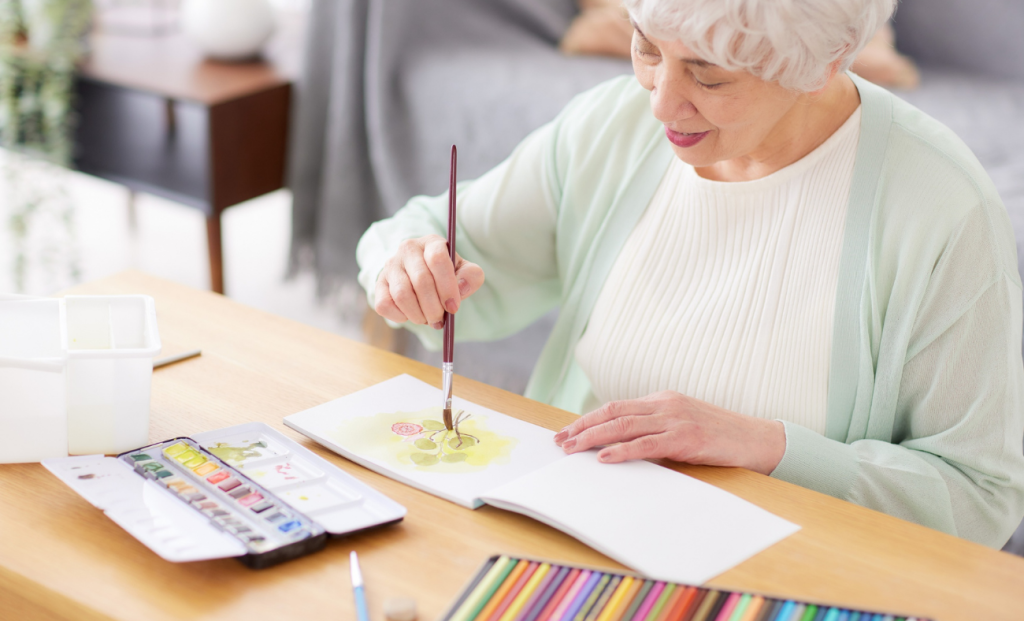
- Watercolors are forgiving and portable
- Digital art on tablets offers endless possibilities without physical mess
- Sketching requires minimal equipment but provides maximum satisfaction
- Abstract expressionism doesn’t require perfect technique—it requires emotion, which you have in abundance
Photography
- Smartphones make photography accessible to everyone
- You have a lifetime of interesting subjects and stories to document
- Travel photography combines creativity with adventure
- Portrait photography captures the wisdom in faces like yours
Fiber Arts
- Quilting combines mathematical precision with artistic expression
- Knitting and crocheting are meditative and practical
- Embroidery allows for intricate, personal storytelling
- Weaving connects you to ancient traditions while creating modern beauty
Literary Arts
Memoir Writing You have stories that need telling. The key is finding your unique angle:
- Focus on specific themes rather than trying to cover everything
- Write for specific audiences (your grandchildren, other women of your generation, people in your profession)
- Don’t worry about publishing—write for the joy of preserving memories
Fiction Writing
- Mystery novels benefit from life experience and understanding of human nature
- Historical fiction draws on periods you actually lived through
- Short stories are manageable projects with satisfying completion
- Poetry distills emotions and experiences into concentrated beauty
Blogging and Online Writing
- Share expertise from your professional life
- Document learning new skills (like technology!)
- Create communities around shared interests
- Provide advice and perspective to younger generations
Performing Arts
Music
- It’s never too late to learn an instrument
- Singing groups for seniors provide social connection and creative expression
- Music therapy programs offer structure and community
- Recording yourself singing or playing can preserve family history
Theater
- Community theater welcomes performers of all ages
- Storytelling groups celebrate the art of narrative
- Improvisation classes exercise creativity and quick thinking
- Voice work for audiobooks or radio combines performance with storytelling
Digital Arts
Digital Design
- Create photo books and scrapbooks online
- Design greeting cards and stationery
- Learn graphic design to support causes you care about
- Build websites to showcase your creative work
Video Creation
- Document your creative process
- Create tutorials teaching skills you’ve mastered
- Record family history and stories
- Share your travels and adventures
Overcoming Creative Obstacles
“I’m Not Artistic”
This is the biggest lie we tell ourselves. Everyone is creative—it’s part of being human. You may not have developed traditional artistic skills, but creativity shows up in how you solve problems, decorate your home, plan meals, tell stories, and navigate relationships.
Creativity isn’t about inherent talent; it’s about willingness to play, experiment, and express yourself.
“I Don’t Have Natural Talent”
Talent is overrated. What you have is much more valuable: persistence, patience, and perspective. These qualities produce more meaningful art than raw talent ever could.
Besides, who told you that you lack talent? Often, it’s outdated feedback from decades ago. Your creative abilities have had 80 years to develop.
“It’s Too Late to Start”
Grandma Moses didn’t start painting until she was 78 and created over 1,500 works before her death at 101. Laura Ingalls Wilder didn’t publish her first Little House book until she was 64. Frank McCourt wrote “Angela’s Ashes” at 66 and won the Pulitzer Prize.
Starting at 80 gives you 20+ years of creative potential. How is that “too late”?
“I Don’t Have the Right Space/Tools/Time”
Space: Kitchen table creativity is perfectly valid. Many masterpieces have been created in tiny spaces.
Tools: Start with what you have. A notebook and pen. A smartphone camera. Yarn and needles. Basic supplies for most creative pursuits are surprisingly affordable.
Time: You have more time now than you’ve had in decades. Even 15 minutes a day adds up to meaningful creative work.

Building Your Creative Practice
1. Start Where You Are
Look at what already brings you joy:
- Do you love arranging flowers? Explore floral design or botanical art.
- Do you tell great stories? Consider writing or oral history projects.
- Do you have strong opinions about current events? Try editorial writing or political cartoons.
- Do you love organizing? Explore collage or mixed media art.
2. Give Yourself Permission to Play
Creativity requires playfulness, and play requires giving yourself permission to:
- Make mistakes
- Create “bad” art
- Experiment without knowing the outcome
- Start projects you might not finish
- Change your mind and try something completely different
3. Find Your Creative Community
Creative expression is more fulfilling when shared:
- Join local art groups, writing circles, or craft clubs
- Take classes at community centers or libraries
- Find online communities focused on your interests
- Attend art shows, readings, and performances
- Share your work with family and friends
4. Document Your Creative Journey
Keep a creative journal:
- Record ideas as they come to you
- Document your learning process
- Note what techniques work and what doesn’t
- Save inspiration from other artists
- Track your progress and celebrate improvements
The Science Behind Late-Life Creativity
Research shows that our brains continue forming new neural pathways throughout life. In fact, older adults often show increased creativity because:
- The brain’s two hemispheres become more connected with age
- Reduced inhibition leads to more novel ideas
- Life experience provides richer material to draw from
- Less concern with judgment frees creative expression
Your aging brain isn’t declining creatively—it’s becoming more integrated and capable of making unique connections.
Creative Expression as Medicine
Creating art provides measurable benefits for physical and mental health:
- Reduces stress and anxiety
- Improves cognitive function
- Provides sense of purpose and accomplishment
- Offers social connection opportunities
- Maintains fine motor skills
- Processes emotions and experiences
- Creates lasting legacy
When I’m quilting, everything else fades away. My arthritis doesn’t hurt. My worries disappear. I’m completely present in the moment, focused on color, pattern, and the satisfying rhythm of stitching. It’s better than meditation.
Your Creative Action Plan
Week 1: Explore
- Visit a local art supply store, bookstore, or craft shop
- Browse online galleries, writing platforms, or music sites
- Attend a community arts event
- Check out library books on different creative pursuits
Week 2: Experiment
- Try three different creative activities for 30 minutes each
- Don’t judge the results—focus on the experience
- Notice which activities energize you and which feel like work
Week 3: Choose and Commit
- Select one creative pursuit to focus on
- Gather basic supplies
- Find one learning resource (book, video, class, or mentor)
- Set aside regular time for creative work
Week 4: Share
- Show someone your work (even if it feels unfinished)
- Join a group or community related to your chosen medium
- Set up a dedicated creative space in your home
- Plan your next project
A Personal Challenge
I challenge you to create something this week. Anything. A poem about your morning coffee. A sketch of your pet. A photo that captures something beautiful in your everyday life. A story about a childhood memory. A song that makes you laugh.
It doesn’t have to be good. It just has to be yours.
The Legacy of Late-Life Creativity
When you create something—a quilt, a painting, a story, a song—you’re not just making art. You’re:
- Preserving your unique perspective for future generations
- Proving that age doesn’t diminish human creativity
- Inspiring others to pursue their own creative dreams
- Adding beauty and meaning to the world
- Honoring the creative spirit that makes us human
My quilts will outlast me. Long after I’m gone, someone will wrap themselves in the patterns I designed and the stories I stitched into every seam. That thought fills me with more satisfaction than any career achievement ever did.

The Truth About Creativity After 80
Here’s what I’ve learned: creativity isn’t about producing masterpieces. It’s about engaging fully with life, expressing your unique perspective, and finding joy in the process of making something that didn’t exist before you touched it.
At 80-something, you have permission to create fearlessly. You’ve earned the right to make art for no other reason than because it brings you joy. You have stories to tell, beauty to capture, and emotions to express that only you can share.
Your creative voice has never been more valuable than it is right now.
So pick up that paintbrush. Start that story. Learn that instrument. Design that garden. Write that poem. Sing that song.
The world is waiting to see what you’ll create next.
What creative pursuit is calling to you? What’s stopping you from starting? Share your thoughts, fears, or creative dreams in the comments below. Let’s inspire each other to embrace our most creative years.
Ready to connect with other creative spirits in their 80s? Join our creative community where we share projects, offer encouragement, and celebrate the art of living creatively at any age.