Recently, I watched my 80-something neighbor struggle to reach a coffee mug from an upper cabinet, then nearly lose her balance trying to get back down safely. Later that same day, she spent twenty minutes looking for her reading glasses, which were buried under a stack of mail on her kitchen counter.
These aren’t signs of decline—they’re signs of a home that hasn’t been adapted to support independent living in our 80s.
Your home should work for you, not against you. With some thoughtful organization and strategic modifications, you can create a living space that supports your independence, safety, and quality of life for years to come.

The Home Organization Mindset Shift
Before we talk about specific strategies, we need to address the mental shift required for effective home organization in your 80s. This isn’t about admitting defeat or accepting limitations—it’s about smart adaptation.
You’ve spent decades accumulating possessions, developing habits, and arranging your space in certain ways. Some of those arrangements may have worked perfectly when you were 40 or 60, but they might be working against you now.
The goal isn’t to turn your home into a sterile, institutional space. It’s to create an environment that:
- Minimizes physical strain and injury risk
- Maximizes efficiency in daily tasks
- Reduces time spent searching for items
- Supports your current abilities while anticipating future needs
- Maintains the comfort and personality that makes it home
Room-by-Room Organization Strategy
Kitchen: The Heart of Daily Function
The kitchen often requires the most attention because it’s where we perform multiple complex tasks daily.
Prioritize Counter Space
- Keep counters as clear as possible
- Store daily-use items in easy-reach cabinets or on accessible shelves
- Use a “one-task rule”: clean up completely before starting the next task
- Consider a rolling cart for extra prep space that can be moved where needed
Strategic Item Placement
- Shoulder height (easiest): Everyday dishes, glasses, frequently used spices
- Counter level: Coffee maker, toaster, items used daily
- Lower cabinets: Heavy items like pots and appliances
- Upper cabinets: Light, occasionally-used items only
Safety Modifications
- Install pull-out shelves in lower cabinets to avoid bending and reaching
- Use lazy Susans in corner cabinets for easy access
- Replace hard-to-grip knobs with lever-style handles
- Ensure adequate lighting over all work surfaces
- Keep a stable step stool with handrails if you must reach higher shelves
Smart Storage Solutions
- Drawer dividers for utensils and small items
- Clear containers for pantry items (easier to see contents)
- Magnetic strips on walls for knives and metal utensils
- Hook systems inside cabinet doors for measuring cups and spoons
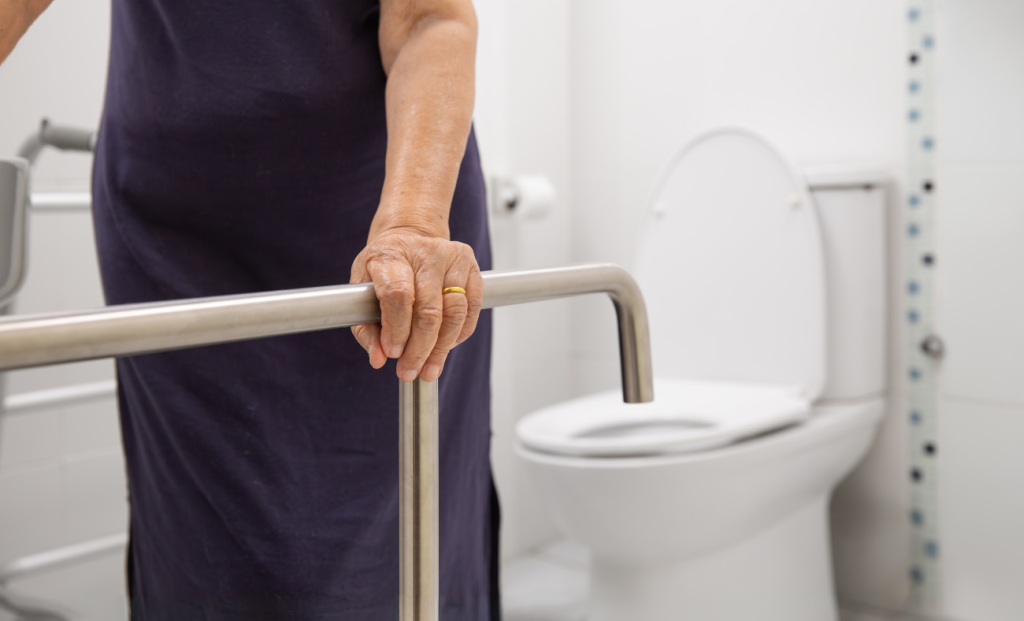
Bathroom: Safety First
The bathroom presents the highest injury risk in most homes, so organization here is literally a matter of safety.
Shower and Bath Organization
- Install corner caddies at appropriate height to avoid bending
- Use suction-cup organizers sparingly (they can fail unexpectedly)
- Keep shower/bath surfaces clear of bottles to prevent slipping
- Consider a shower bench or chair for safer bathing
Medicine Management
- Never store medications in the bathroom (humidity affects them)
- Use a locking medicine box in a bedroom or kitchen
- Keep a current medication list posted inside the box
- Organize medications by time of day or body system
- Set up weekly pill organizers to simplify daily medication management
Essential Item Accessibility
- Keep towels at shoulder height or lower
- Store toiletries where you won’t need to bend or stretch
- Use a caddy to carry items between bedroom and bathroom
- Ensure adequate lighting for tasks like nail trimming or applying makeup
Bedroom: Rest and Functionality
Your bedroom should support good sleep while serving as a functional space for dressing and personal care.
Bedside Essentials
- Keep a flashlight, phone charger, water glass, and any emergency medications within easy reach
- Use a bedside caddy or organizer to prevent items from falling
- Ensure light switches are easily accessible from bed
- Consider a bedside commode for nighttime safety if bathrooms are far away
Closet Organization
- Arrange clothing by frequency of use (everyday items at eye level)
- Use closet organizers to maximize space and accessibility
- Install better lighting inside closets
- Keep shoes in clear boxes or on accessible racks
- Use long-handled shoehorns and sock aids if bending is difficult
Seasonal Clothing Management
- Store out-of-season clothes in less accessible areas
- Keep current season clothes in prime real estate
- Consider having duplicates of essentials to reduce laundry frequency
- Use vacuum storage bags for bulky items like comforters
Living Areas: Comfort and Safety
Living rooms and family rooms should be organized for both daily comfort and easy maintenance.
Furniture Arrangement
- Ensure clear pathways between furniture (minimum 36 inches wide)
- Position seating to minimize the need to reach across tables
- Keep frequently used items (remote controls, reading glasses, books) within arm’s reach of seating
- Use furniture with built-in storage to reduce clutter
Lighting Strategy
- Provide multiple lighting options in each seating area
- Use lamps with touch controls or large switches
- Ensure pathways are well-lit, especially between seating and bathrooms
- Consider motion-sensor lights for nighttime navigation
Technology Organization
- Keep all remote controls in one designated basket or organizer
- Label remotes clearly if you have multiple devices
- Ensure charging stations are easily accessible
- Organize cables to prevent tripping hazards
The Paper Management Challenge
Paper clutter is one of the biggest organizational challenges for people in their 80s. Here’s a system that actually works:
Create Four Categories:
- Action Required (bills to pay, forms to complete)
- Reference (insurance policies, medical records)
- Archive (tax returns, important documents)
- Discard (outdated information, junk mail)
Daily Mail Routine:
- Sort mail immediately upon bringing it inside
- Discard junk mail immediately
- File bills in “Action Required” folder
- Handle simple tasks (like reading newsletters) immediately when possible
Important Document Organization:
- Use a fireproof filing cabinet or safe deposit box for irreplaceable documents
- Keep copies of important documents in a separate location
- Create a master list of where important documents are located
- Share this information with trusted family members
Technology as an Organizational Tool
Don’t let technology intimidate you—it can be a powerful ally in home organization:
Smartphones for Organization:
- Camera: Take photos of items you’re storing in less accessible places
- Notes app: Create shopping lists, medication schedules, and reminders
- Calendar: Set reminders for regular tasks like changing air filters
- Voice memos: Record quick reminders when writing isn’t convenient
Simple Apps That Help:
- Medication reminder apps: Never forget doses again
- Grocery list apps: Build lists throughout the week, share with helpers
- Calendar apps: Track appointments, maintenance schedules, and social events
Smart Home Devices:
- Voice assistants: Set timers, create reminders, control lights
- Smart thermostats: Maintain comfortable temperatures automatically
- Smart lighting: Control lights remotely or with voice commands

Maintenance and Upkeep Systems
An organized home requires ongoing maintenance. Create systems that work with your energy levels and physical abilities:
Daily Habits:
- Make bed every morning (starts the day with accomplishment)
- Clean up kitchen completely after each meal
- Sort mail immediately
- Put items back in designated places after use
- Do one small organizing task each day
Weekly Routines:
- Set aside time for laundry (consider wash-and-fold services if helpful)
- Review and update grocery lists
- Clean and organize one small area
- Check medication supplies
- Review the upcoming week’s appointments and activities
Monthly Tasks:
- Review and purge expired items (medicines, food, cosmetics)
- Evaluate what’s working and what isn’t in your organizational systems
- Schedule or complete home maintenance tasks
- Organize important papers